
 Skip to content


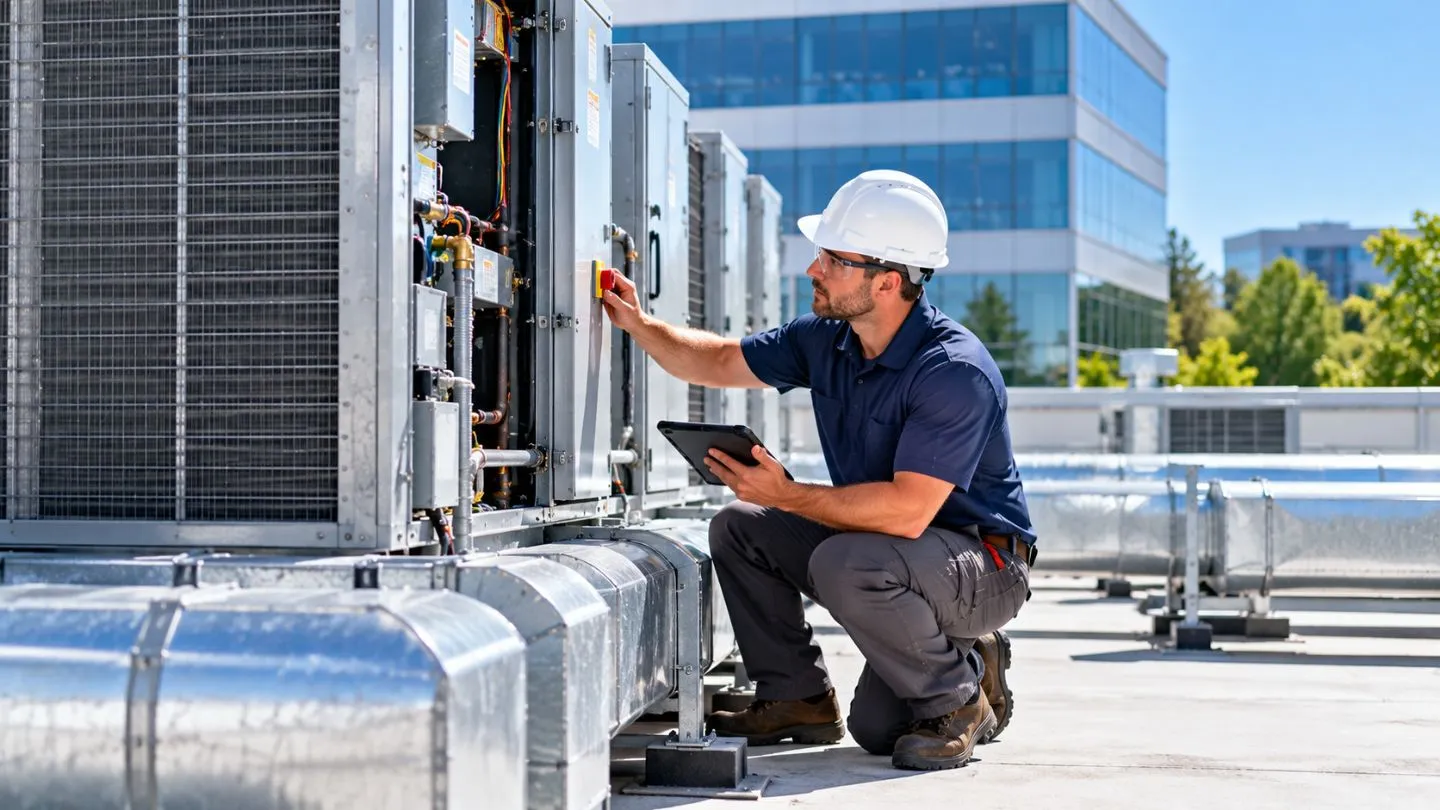
Rising energy costs and persistent comfort complaints are two of the most common frustrations facing Florida commercial building owners today. Understanding how to improve HVAC performance in commercial buildings starts with recognizing that HVAC systems account for the largest share of total energy use in most commercial spaces. When these systems underperform, the financial and operational consequences ripple through every aspect of your business.
This blog covers proven strategies for improving your commercial HVAC system, from essential maintenance practices and smart controls to advanced optimization techniques tailored specifically for Florida’s demanding climate. Whether you manage an office building, retail space, or multi-tenant property in the Port Charlotte area, you’ll find actionable steps to enhance energy efficiency, lower operational costs, and create a healthier indoor environment for your building occupants.
Key Takeaways
- Regular preventive maintenance can improve HVAC efficiency and extend equipment life significantly over time.
- Smart controls and automation optimize energy use based on occupancy and weather conditions, reducing energy waste during unoccupied hours.
- Proper airflow management and ductwork sealing prevent wasted energy and maintain consistent temperature control across zones.
- Building envelope improvements reduce the workload on your HVAC systems by limiting heat gain and moisture intrusion.
- Professional assessments identify specific system performance issues and deliver cost-effective solutions matched to your building’s needs.
Essential Maintenance Strategies for Peak Performance
Regular maintenance is the single most impactful step you can take to improve HVAC performance in any commercial building. Poorly maintained HVAC systems lead to higher operating costs, degraded indoor air quality, and shortened equipment lifespans. In Florida’s climate, where air conditioning systems run nearly year-round, even minor maintenance gaps compound quickly into major inefficiencies.
Air filter management is a foundational task that directly influences both energy consumption and air quality. Clogged filters force HVAC systems to work harder, restricting airflow and increasing energy bills. Regularly cleaning air filters can meaningfully improve energy efficiency across your entire system. In Florida, where high humidity and airborne particulates accelerate filter clogging, more frequent replacement schedules are essential. Upgrading to high-efficiency air filtration also improves indoor air quality, creating a healthier environment for employees and tenants. Proper commercial HVAC management can also support healthier indoor environments and help prevent sick building syndrome.
Coil cleaning is equally critical. Dirty evaporator and condenser coils reduce heat transfer, which diminishes cooling capacity and forces equipment to run longer cycles. For coastal buildings near Port Charlotte, salt air accelerates buildup on outdoor coil surfaces, making scheduled cleaning even more important.
Refrigerant level checks ensure your system operates at peak efficiency. Under- or over-charged refrigerant reduces cooling output and increases power draw, which leads to increased energy consumption and accelerated compressor wear.
Electrical component inspections address the gradual degradation of contactors, capacitors, wiring, and sensors caused by Florida’s humidity and corrosive salt air. Loose connections and faulty sensors lead to inefficient operation and unexpected breakdowns.
Condensate drainage management is often overlooked but essential. Blocked drain lines and standing water in condensate pans encourage microbial growth, compromise indoor air quality, and can cause water damage to ceiling tiles and surrounding structures. Routine preventive maintenance includes cleaning coils, checking refrigerant levels, and verifying drainage pathways remain clear.
Creating a Preventive Maintenance Schedule

A structured preventive maintenance schedule is the backbone of reliable HVAC operations. Here’s how to structure yours for Florida’s commercial environment:
Monthly tasks:
- Inspect and replace air filters as needed
- Visually check belts, fan operation, and airflow
- Verify thermostat and humidistat settings
- Confirm condensate drains are flowing freely
Quarterly tasks:
- Clean evaporator and condenser coils
- Perform electrical diagnostics on contactors, capacitors, and wiring
- Check refrigerant levels and system pressures
- Calibrate controls and sensors
Annual tasks:
- Conduct a comprehensive full-system inspection
- Perform load testing under operating conditions
- Measure duct leakage and assess airflow balance
- Evaluate building envelope integrity for air and moisture infiltration
Professional maintenance contracts offer clear advantages over in-house approaches for commercial buildings. Choosing the right commercial HVAC contractor can help ensure your system receives consistent maintenance and specialized support. A dedicated HVAC partner ensures consistent adherence to the schedule, brings specialized diagnostic equipment, and catches developing issues before they become emergency repairs. In Florida’s demanding climate, the frequency of these touchpoints matters – skipping quarterly coil cleaning or sensor calibration during cooling season can erase efficiency gains quickly. Regular maintenance extends the lifespan of HVAC systems and protects your investment over the long term.
Smart Controls and System Optimization
Modern control technologies represent some of the highest-leverage opportunities to reduce HVAC energy consumption and improve occupant comfort. Even well-maintained existing systems can waste significant energy without intelligent controls managing their operation.
Programmable Scheduling
Programmable scheduling adjusts temperatures based on occupancy to reduce energy use. Smart scheduling minimizes temperature conditioning during unoccupied hours, which saves energy without sacrificing comfort during business operations. For commercial spaces with predictable occupancy patterns, this alone can deliver meaningful energy savings. Understanding the best thermostat settings for your system type further enhances these benefits.
Building Management Systems
Building management systems integrate HVAC, lighting, and security systems into a centralized platform. A BMS allows real-time monitoring of energy use and system performance, giving facility managers visibility into how each zone and piece of equipment is operating. These systems can automate temperature settings based on occupancy levels, enabling truly responsive climate control. Integrating HVAC with a BMS optimizes performance and energy efficiency across your entire building portfolio. Energy Management Systems automate scheduling and monitor real-time loads, making them indispensable for larger commercial buildings aiming for lower operational costs.
Variable Frequency Drives
Variable Frequency Drives match motor speed to heating and cooling demand rather than running fans and pumps at full speed constantly. This approach to air handling dramatically reduces motor energy draw during partial-load conditions, which represents most of the operating hours in a typical commercial building.
Demand-Controlled Ventilation
Demand-Controlled Ventilation adjusts outdoor air intake based on occupancy levels using CO₂ or occupancy sensors. This prevents over-ventilation – a common source of energy waste in commercial buildings where conditioning unnecessary outdoor fresh air places a heavy burden on cooling systems, especially in Florida’s humid climate.
Energy Recovery Ventilation
Energy recovery ventilation systems pre-condition incoming fresh air by reclaiming energy from exhaust air. In Florida, where the temperature and humidity difference between outdoor and indoor air is substantial for most of the year, ERV systems reduce the cooling load placed on your primary HVAC equipment.
Variable Air Volume Systems
Variable Air Volume systems optimize airflow based on real-time demand, delivering conditioned air only where and when it’s needed. Automated HVAC systems that adjust based on occupancy and weather conditions consistently outperform fixed-output designs in both energy usage and comfort delivery.
Advanced Performance Enhancement Techniques
When maintenance and controls are optimized, the next level of HVAC performance improvement involves structural, systemic, and equipment upgrades. These investments require more capital but deliver compounding returns when layered on top of a solid maintenance and controls foundation.
Ductwork Inspection, Sealing, and Balancing
Ductwork inspection, sealing, and balancing addresses one of the most overlooked sources of energy waste in commercial buildings. Leaky ductwork loses conditioned air into unconditioned spaces like ceiling plenums and wall cavities, forcing your system to work harder and use more energy to maintain setpoints. Duct sealing reduces thermal losses and unconditioned air infiltration, improving both efficiency and comfort. Proper ductwork maintenance also ensures balanced airflow to all zones, which is critical for effective humidity control in Florida’s climate. Sealing gaps and cracks throughout the duct system improves indoor comfort and reduces energy loss.
Building Envelope Improvements
Building envelope improvements directly reduce the workload your HVAC systems must handle. A well-insulated building envelope reduces heating and cooling needs by limiting heat gain in summer and heat loss during winter. Upgrading insulation in roofs, walls, and floors can meaningfully reduce heating and cooling costs. Heat gain and loss through windows accounts for a substantial portion of total energy use in commercial buildings, making window efficiency upgrades – such as low-E coatings, tinted glazing, or reflective films – highly impactful. Adding exterior shading and reflective roofing further reduces solar heat gain, which is particularly relevant for Florida’s intense sun exposure. Improving window efficiency can significantly lower energy consumption throughoaut the year.
Equipment Upgrades
Equipment upgrades should be evaluated when existing systems are aging, experiencing frequent repairs, or operating well below current efficiency standards. Recognizing the signs your commercial HVAC system needs attention can help address developing problems before they lead to costly repairs or system failure. Modern HVAC systems – including high-efficiency rooftop units, Variable Refrigerant Flow systems, and heat pumps – deliver superior performance compared to older equipment. Understanding the differences between commercial and residential HVAC systems is important when evaluating equipment, capacity, controls, and maintenance requirements. Heat pumps can be significantly more energy efficient than traditional systems, making them an attractive option for Florida commercial buildings. For buildings with unique layout requirements, ductless mini-split systems offer zone-by-zone flexibility without extensive ductwork.
Energy Auditing and Continuous Commissioning
Energy auditing and continuous commissioning provide the data-driven foundation for making informed upgrade decisions. Energy audits identify where your building is consuming the most energy and which improvements will deliver the greatest return. Continuous commissioning audits HVAC systems for improved efficiency on an ongoing basis, catching performance drift before it becomes a significant cost issue. Energy monitoring technologies provide real-time data on energy use, enabling facility managers to track trends, verify savings, and adjust strategies. Predictive maintenance reduces energy waste and extends HVAC system life by identifying developing problems before they cause failures.
Humidity Control Enhancements
Humidity control enhancements deserve special attention in Florida’s commercial buildings. Inadequate dehumidification leads to mold growth, condensation issues, and occupant discomfort – problems that go beyond energy costs to affect health and property. Properly sized equipment, multi-stage cooling, and supplemental dehumidification units ensure latent loads are met without overcooling spaces. Enhancing HVAC performance improves indoor air quality and extends equipment life, making humidity management both a comfort and a financial priority. Understanding how commercial HVAC systems affect indoor air quality helps building owners make informed decisions about dehumidification strategies.
Read More: How Does Humidity Affect Air Quality
Maximizing Commercial HVAC Efficiency

Improving HVAC performance in commercial buildings requires consistent maintenance, efficient equipment, proper airflow, and responsive system management. By addressing inefficiencies early and optimizing system operation, businesses can maintain comfortable indoor environments, reduce unnecessary energy consumption, and support reliable HVAC performance while minimizing unexpected disruptions and operating costs.
Total Comfort Cooling & Heating provides dependable solutions for businesses seeking professional HVAC support. With our expertise in commercial HVAC service in Port Charlotte, we help maintain efficient and comfortable commercial environments. We also provide commercial hoods, commercial refrigeration, air conditioners, and indoor air quality solutions. Contact us today to improve your commercial HVAC performance.
Frequently Asked Questions
How often should commercial HVAC systems be maintained for optimal performance?
Commercial HVAC systems in Florida should receive professional maintenance at minimum on a quarterly basis, with monthly filter inspections and replacements as needed. Florida’s extended cooling season and high humidity accelerate wear on components like coils, filters, and electrical connections. Regular maintenance can improve HVAC energy efficiency and prevent small issues from becoming expensive repairs, keeping your system running at peak efficiency throughout the year.
What are the most cost-effective ways to improve HVAC efficiency in existing commercial buildings?
The most impactful starting points are optimizing your maintenance program, upgrading controls and scheduling, and sealing ductwork. These improvements typically require lower upfront investment than full equipment replacement while delivering meaningful energy savings. Adding programmable scheduling, demand-controlled ventilation, and variable frequency drives to existing systems can dramatically reduce energy consumption without replacing major equipment.
How can I tell if my commercial HVAC system needs professional optimization?
Key warning signs include rising energy bills without a corresponding rate increase, recurring comfort complaints from tenants or employees, uneven temperatures across zones, visible condensation or mold near vents, frequent emergency repair calls, and equipment that cycles on and off rapidly or runs continuously. If your controls are outdated, your ductwork hasn’t been inspected recently, or your system is approaching the end of its expected lifespan, a professional assessment from a qualified commercial HVAC contractor can identify specific opportunities for improvement.
What role does Florida’s climate play in commercial HVAC performance?
Florida’s climate creates challenges that don’t exist in milder regions. High ambient humidity means HVAC systems must manage significant latent loads in addition to temperature control, requiring properly sized coils and adequate dehumidification capacity. Coastal salt air accelerates corrosion on outdoor equipment. The near-continuous cooling season leaves little equipment downtime, magnifying the impact of any maintenance gaps. Storm season introduces risks of moisture intrusion and equipment damage that require post-storm inspections and proactive preparation.
How do smart controls improve commercial HVAC performance and energy savings?
Smart controls transform HVAC operations from fixed schedules to dynamic, responsive management. Building management systems provide real-time visibility into system performance, automate temperature adjustments based on actual occupancy, and alert facility managers to developing issues. Demand-controlled ventilation reduces the energy spent conditioning unnecessary outdoor air, while variable frequency drives match motor output to actual demand. Together, these technologies reduce energy waste, lower operational costs, and maintain consistent comfort for building occupants.
When should commercial building owners consider HVAC system replacement versus optimization?
Consider replacement when your equipment is approaching or past its expected service life, requires increasingly frequent and costly repairs, uses outdated refrigerants, or operates well below current efficiency standards. If optimization efforts – maintenance improvements, controls upgrades, duct sealing – have been implemented and energy consumption remains high, the equipment itself may be the limiting factor. A professional energy audit can quantify the cost difference between continued operation of aging equipment and investment in energy efficient HVAC systems, helping you make a data-driven decision.
