
 Skip to content


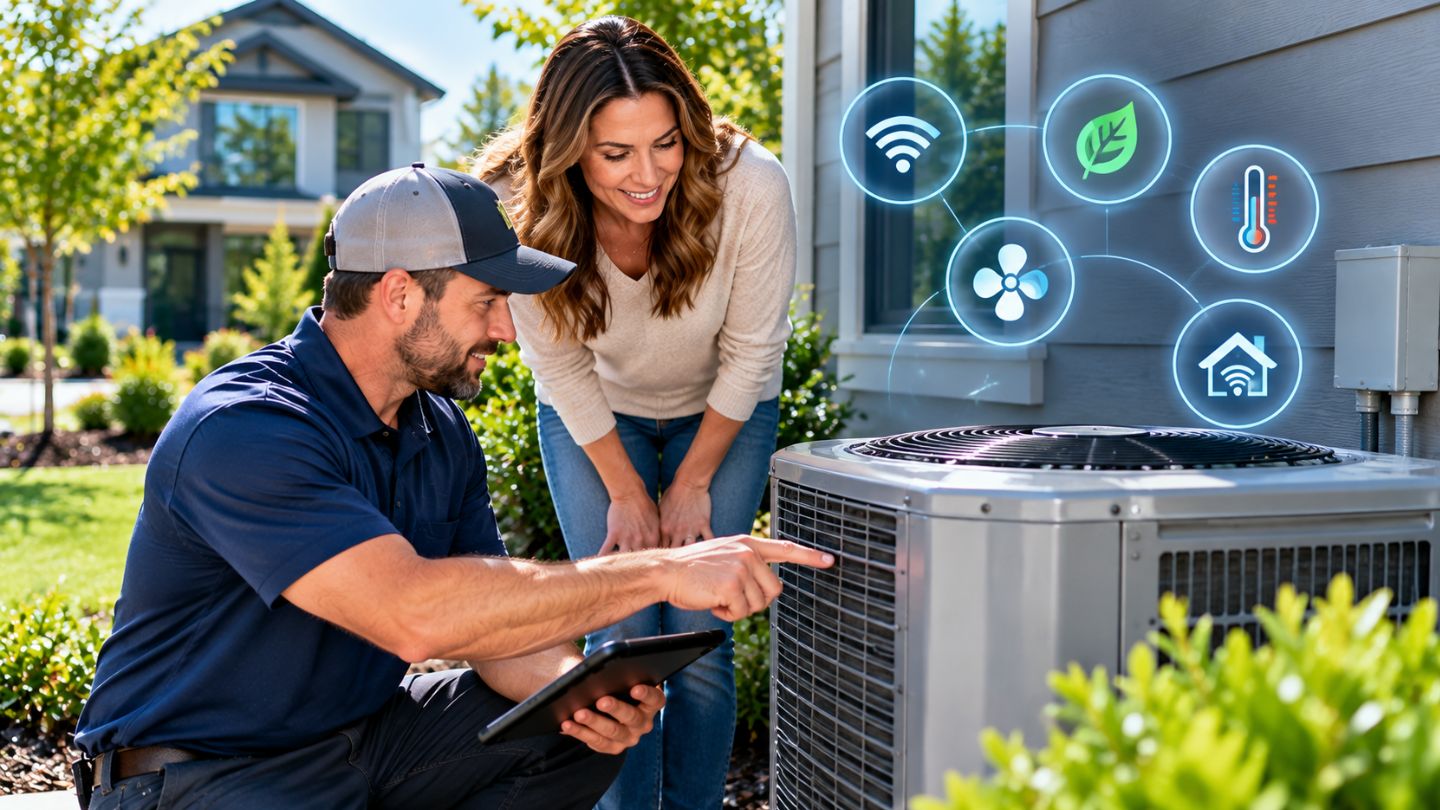
Florida homeowners running older HVAC systems through Port Charlotte’s long cooling season are paying more than they need to. Modern HVAC systems built with inverter compressors, AI-driven controls, and next-generation refrigerants operate on a different level than the single-stage air conditioners installed five or ten years ago. The latest HVAC technology trends reshape how heating and cooling equipment manages temperature, humidity, and indoor air quality inside your home.
This blog covers the HVAC innovations that matter most for homeowners: smart HVAC controls, variable-speed technology, advanced air purification, eco-friendly refrigerants, heat pump advances, and ductless zoning solutions.
Key Takeaways
- Smart HVAC controls learn your schedule, respond to occupancy changes, and reduce unnecessary HVAC runtime automatically.
- Variable-speed HVAC systems deliver consistent temperature control and better humidity removal compared to traditional systems.
- Advanced indoor air quality solutions tackle Florida’s humidity, mold risk, and allergen load with filtration, UV-C treatment, and whole-home dehumidification.
- Eco-friendly refrigerants with lower global warming potential are replacing R-410A under federal and state regulations.
- Heat pump technology improvements and ductless mini-split systems give Florida homeowners flexible, energy-efficient options for both heating and cooling.
Smart HVAC Controls and Home Automation
Smart HVAC controls have moved well past programmable schedules. AI-powered thermostats now process occupancy data, local weather forecasts, and your home’s thermal behavior to adjust compressor speed and fan output in real time. Smart thermostats can reduce energy consumption by up to 47%, according to field studies, because they eliminate the gap between when you leave the house and when your system actually responds. Modern smart thermostats integrate with smart home ecosystems, including voice assistants like Alexa and Google Home, so adjusting temperature settings takes a voice command or a tap on your phone.
Remote monitoring adds another layer. Regular maintenance remains important even with smart monitoring, and this guide to keeping your HVAC running smoothly offers practical ways to support reliable system performance. Smart sensors embedded in your HVAC system track airflow, refrigerant pressure, and filter condition. Proper air distribution is also important for system performance, so understanding air balancing in your HVAC system can help identify airflow issues that affect comfort and efficiency. When something drifts outside the normal range, you receive an alert on your phone before the problem causes a breakdown. This predictive maintenance capability is especially valuable during Florida’s peak cooling months, when a system failure means hours of heat and humidity indoors.
For Port Charlotte homeowners managing seasonal swings between mild winters and intense summers, smart technology adapts setpoints automatically. Smart thermostats learn user preferences within days. Automated scheduling in smart thermostats improves comfort consistency, and smart thermostats can alert users to change air filters, keeping equipment performance steady between service visits.
Read More: How Often You Should Change Your HVAC Air Filter: A Practical Guide
Advanced Thermostat Technology Features
Learning algorithms inside modern thermostats track when rooms are occupied, how long your home takes to cool down from a given outdoor temperature, and what time you typically arrive home. Within a few days of installation, the thermostat builds a thermal model of your house and uses it to pre-cool before you arrive rather than reacting after you walk in the door.
Geofencing uses your smartphone’s GPS to detect when you leave a set radius around your home. The system shifts to an energy-saving setpoint while you’re away and begins cooling before you return. This approach helps reduce energy consumption without requiring you to remember manual adjustments. There are also several other ways to make your HVAC more energy efficient, from improving system operation to reducing unnecessary energy use.
Integration extends beyond temperature. Smart HVAC systems connect with whole-home energy management platforms, allowing your thermostat to coordinate with solar panels, battery storage, and even demand response programs. Demand response technology helps HVAC systems reduce electricity consumption during high-demand periods by briefly adjusting output when the grid is stressed. If you’re choosing a thermostat for your home, make sure it supports your HVAC system’s communication protocol, especially if you’re pairing it with variable-speed equipment.
Variable-Speed and Inverter HVAC Technology

Traditional HVAC systems cycle on at full power and shut off when the thermostat reads the target temperature. This creates temperature swings, spikes in energy use at startup, and short run times that remove heat but leave humidity behind. Variable-speed HVAC systems work differently. An inverter-driven compressor adjusts its output across a continuous range, running at lower compressor speed when the load is light and ramping up only during peak afternoon heat.
Unlike traditional systems, variable-speed systems run for longer stretches at reduced output. This keeps evaporator coils cold enough to pull moisture from the air continuously, which is why variable-speed technology is a direct answer to Florida’s humidity problem. The “clammy” feeling that persists even when the thermostat reads 75°F usually means the system is short-cycling and failing to handle the latent moisture load. Variable-speed systems can save 15-42% energy compared to traditional systems because they match output to demand rather than wasting power at full blast.
Noise levels drop as well. A variable-speed outdoor unit running at partial capacity produces less sound than a single-stage unit kicking on at full power every cycle. Equipment wear decreases because the soft-start characteristic of inverter compressors eliminates the electrical surge and mechanical stress of hard starts.
The upfront cost for variable-speed cooling equipment is higher than single-stage alternatives. However, the payback period in many Florida homes falls within a reasonable window due to the region’s extended cooling season and rising electricity rates. To understand how a new AC system can lower your energy bills in Port Charlotte, the key variable is how many hours per year your system runs, and in Southwest Florida, that number is high.
Common Installation Mistakes to Avoid
Undersizing or oversizing the system. Proper Manual J load calculations are non-negotiable. An oversized variable-speed system short-cycles even at minimum output, defeating the purpose of inverter technology. An undersized unit runs at maximum capacity constantly and cannot maintain setpoint during peak heat.
Improper ductwork. Ductwork leaks can waste 20-30% of energy in HVAC systems. Variable-speed fans modulate airflow, and leaky or poorly sized ducts create pressure imbalances that reduce efficiency and cause uneven temperatures between rooms. Sealing and right-sizing ducts before or during installation is essential.
Skipping professional calibration. Variable-speed systems require commissioning: verifying refrigerant charge, airflow rates, sensor calibration, and control board settings. A unit that ships from the factory still needs site-specific tuning to operate efficiently in your home’s conditions.
Using incompatible thermostats. Older thermostats that only send on/off signals cannot communicate with inverter compressors. The control system must support variable-speed modulation. If you’re upgrading your cooling system, plan to upgrade the thermostat at the same time.
Revolutionary Indoor Air Quality Solutions

Florida’s combination of heat, humidity, and organic growth creates indoor air quality challenges that go beyond what a standard filter can handle. Advanced filtration systems capture particles as small as 0.1 microns, including mold spores, pollen, pet dander, and fine particulate matter that passes through basic fiberglass filters. MERV 13 filters can improve indoor air quality by capturing a high percentage of airborne particles in the 0.3-1.0 micron range, and nanotechnology is enhancing air filtration efficiency in the latest filter media designs.
Smart sensors in filtration systems monitor air quality in real-time, measuring particulate counts, VOC levels, CO₂ concentration, and humidity. When readings rise above thresholds, the system increases ventilation or boosts filtration automatically. Advanced filtration systems reduce airborne contaminants and allergens without requiring manual intervention.
UV-C germicidal irradiation applied to cooling coils prevents biofouling, the buildup of mold and bacteria on wet coil surfaces that degrades heat transfer and pushes spores into your airstream. Research on coil-mounted UVGI systems shows measurable improvements in heat-transfer efficiency and reductions in air-side pressure drop, which translates to lower operating costs and cleaner air throughout your home.
Whole-home dehumidification is a separate category from your AC system’s incidental moisture removal. In Florida, humidity affects air quality and health year-round because outdoor dew points stay elevated even during cooler months. A dedicated dehumidifier maintains indoor relative humidity between 45-55% regardless of whether the air conditioner is running, protecting your indoor environment against mold growth and dust mite proliferation. Maintaining proper humidity is one part of preventing moisture-related problems, while these strategies can also help prevent mold in your HVAC system.
Energy Recovery Ventilators are becoming standard in modern homes for improved indoor air quality. ERVs bring in fresh outdoor air while recovering energy from the exhaust stream, balancing ventilation needs against the energy penalty of conditioning hot, humid outside air.
Read More: How Whole Home Air Purification Systems Improve Indoor Air Quality
Eco-Friendly Refrigerants and Environmental Compliance
The HVAC industry is in the middle of a refrigerant transition. R-410A, the standard in residential air conditioners and heat pumps for the past two decades, is being phased down under the federal AIM Act and Florida’s SB 1226. R-32 and R-454B are low-global-warming-potential refrigerants designed to replace R-410A. Eco-friendly refrigerants reduce greenhouse gas emissions, and regulatory mandates at both the federal and state levels drive the transition to eco-friendly refrigerants.
Eco-friendly refrigerants have lower global warming potential than R-410A. Hydrofluoroolefins (HFOs) used in blends like R-454B have near-zero ozone depletion potential. New refrigerants maintain strong cooling performance while being eco-friendly; the thermodynamic properties are comparable to R-410A, so cooling capacity does not suffer.
R-454B and R-32 carry an A2L safety classification: mildly flammable, low toxicity. Systems designed for these refrigerants include leak detectors, flame-resistant electrical components, and specific clearance requirements around the outdoor unit. Technicians installing and servicing A2L equipment need specialized training and certification, which is why working with a qualified HVAC company matters during this transition.
If your current system uses R-410A and is running well, you do not need to replace it immediately. However, as R-410A supply tightens and prices rise over the next few years, homeowners with aging systems should factor the refrigerant transition into their replacement timeline. Choosing a new system that uses R-454B or R-32 positions you for long-term environmental compliance and avoids the cost escalation tied to diminishing R-410A availability. This step supports both environmental responsibility and practical cost savings.
Heat Pump Technology Advances for Florida Homes
Modern heat pumps provide efficient heating and cooling from a single system. In Florida, heat pumps already handle the majority of residential heating and cooling loads. What has changed is how well they do it. Many heat pumps feature variable-speed compressors for efficiency, adjusting output to match the load rather than cycling on and off. Heat pumps use less energy than traditional heating systems relying on electric resistance strips or natural gas furnaces, and heat pumps can reduce overall energy consumption when paired with the right controls.
High-efficiency heat pumps operate effectively in cold climates, and while Port Charlotte rarely sees freezing temperatures, the cold-climate engineering improvements carry over into better performance at moderately low temperatures, higher HSPF2 ratings, and improved dehumidification during cooling mode. If you’re considering upgrading your heat pump, the current generation of high-efficiency heat pumps delivers measurably better performance than units from even five years ago.
Dual-fuel systems pair a heat pump with backup electric resistance heating for the rare cold snaps that drop below a heat pump’s efficient operating range. In Florida, the backup runs infrequently, but it provides insurance during those few nights per year when temperatures dip into the 30s.
Air-to-water heat pumps are an emerging option that provides both heating and cooling through a water loop, and can also supply domestic hot water from a single outdoor unit. These systems are less common in Florida residential applications today but represent a direction the HVAC industry is moving toward for comprehensive home comfort.
New efficiency standards include SEER2 for cooling and HSPF2 for heating, replacing the older SEER and HSPF metrics. The HVAC industry is shifting toward extreme energy efficiency and electrification, and these updated rating systems set higher baseline performance requirements for new equipment. When comparing systems, look at SEER2 and HSPF2 ratings as apples-to-apples benchmarks for equipment performance.
Ductless and Zoning Solutions
Ductless mini-split systems provide zone-based temperature control by placing an indoor unit in each room or area that needs independent temperature management. Each indoor unit connects to a shared outdoor unit, and inverter-driven compressors modulate output for each zone independently. Ductless mini-splits can achieve up to 40% energy savings because they avoid energy losses associated with traditional ductwork and deliver conditioned air directly where it is needed.
For Port Charlotte homeowners adding a sunroom, converting a garage, or finishing an attic, ductless systems eliminate the need to extend traditional ductwork into spaces where routing ducts is expensive or impractical. These systems are ideal for homes without existing ductwork, and they fit renovation projects where cutting into walls and ceilings for duct runs is undesirable. Ductless mini-splits operate quietly and have a sleek design that mounts flush to walls or ceilings. Learn more about how a ductless mini-split works for both heating and cooling applications.
Zoned HVAC systems allow independent temperature control in different areas of a home. In ducted systems, motorized dampers open and close to direct airflow to specific zones based on individual thermostat readings. This solves the problem of uneven temperatures in multi-story homes or rooms with large west-facing windows that absorb more solar heat. Zoning systems let you reduce unnecessary HVAC runtime in unoccupied rooms while maintaining comfort in the spaces you use most.
The cost-effectiveness of zoning depends on your home’s layout, the condition of existing ductwork, and how many zones you need. A home with sealed, properly sized ducts benefits immediately from adding zone dampers and smart controls. A home with leaky, undersized ducts may need duct remediation first to see the full benefit.
Embracing the Future of Home Comfort

The latest HVAC technology trends are transforming how homeowners manage comfort, efficiency, and indoor air quality. From smart controls and energy-efficient systems to advanced climate solutions, modern innovations help create more convenient and sustainable living spaces while reducing energy consumption and improving overall home performance.
Total Comfort Cooling & Heating delivers reliable solutions for homeowners seeking expert HVAC services and improved comfort. As a trusted HVAC provider in Port Charlotte, we help keep homes efficient with professional support for air-handlers, air-conditioners, ductless systems, and furnaces. Contact us today to upgrade your home comfort with advanced HVAC solutions.
Frequently Asked Questions
What HVAC technology provides the best energy savings for Florida homeowners?
Variable-speed HVAC systems and smart controls deliver the largest returns for Florida homeowners because cooling dominates HVAC energy use in this climate. Variable-speed systems can save 15-42% energy compared to traditional systems by modulating output to match the actual load. Adding a smart thermostat compounds those savings by eliminating runtime when no one is home.
How do smart thermostats actually save money on energy bills?
Smart thermostats learn your daily patterns, use geofencing to detect when you leave, and pre-cool your home before you return rather than running at full blast when you walk in the door. Smart thermostats can reduce energy consumption by 10-15% annually through automated scheduling alone. Modern smart thermostats also integrate with smart home ecosystems to coordinate with other energy-using devices in your home.
Are ductless systems worth considering for older Port Charlotte homes?
Yes. Ductless mini-split systems work well in older homes where ductwork is damaged, poorly sealed, or absent. They avoid energy losses associated with traditional ductwork and provide zone-based temperature control, so you condition only the rooms you use. Ductless mini-splits can achieve up to 40% energy savings compared to ducted systems with leaky duct runs, and each indoor unit can be set to a different temperature.
What indoor air quality improvements work best in Florida’s humid climate?
Whole-home dehumidification is the foundation, because excess moisture creates air quality problems even when temperatures feel comfortable. Pair dehumidification with enhanced filtration using MERV 13- or higher-rated filters and UV-C treatment on cooling coils. Smart sensors that monitor air quality in real-time allow your system to adjust ventilation and filtration automatically based on conditions.
How do I know if my current HVAC system can be upgraded with new technology?
Start with an assessment of your ductwork condition, thermostat compatibility, and refrigerant type. Some upgrades, like adding a smart thermostat or UV-C coil treatment, work with existing equipment. Others, like switching to variable-speed technology or new refrigerants, require a full system replacement. A professional evaluation identifies which upgrades deliver the best return for your specific home.
What should I expect when upgrading to eco-friendly refrigerants?
Eco-friendly refrigerants like R-454B and R-32 require equipment specifically designed for A2L-classified gases. You cannot simply swap refrigerants in an existing R-410A system; a new system designed for the replacement refrigerant is needed. The new equipment includes built-in safety features such as leak detectors and flame-resistant components.
